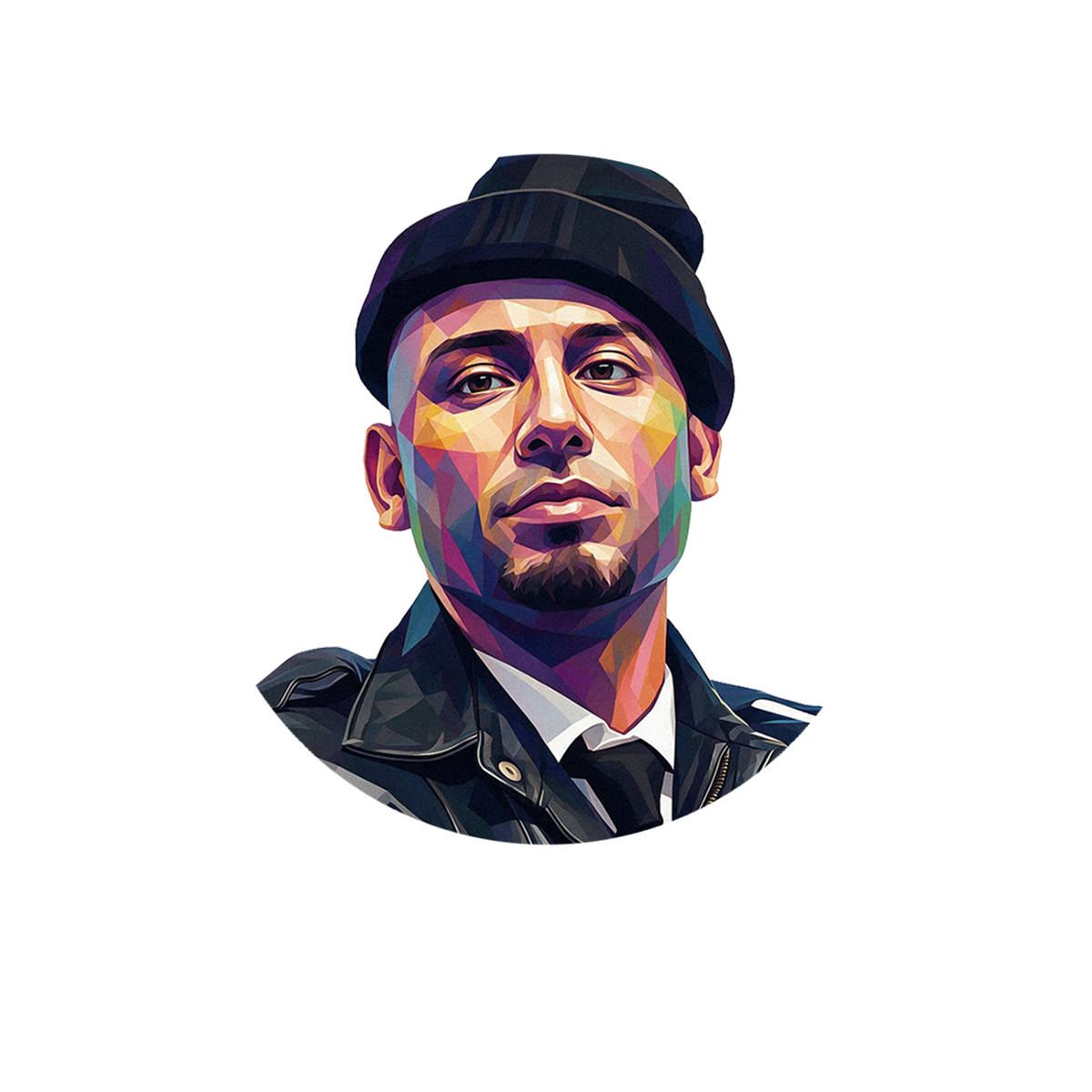
The Wire
The report begged for one last signature.
And he gave it what it wanted.
Black ink scribbled across plain white paper, another day’s damage documented for the detectives who’d inherit it come morning.
Not his bag.
“Heading out, Santiago?”
Officer Dennison leaned in from the doorway—still in uniform, still on the clock—and he nodded back when conversations were brief and energy ran thin.
“Can’t disappoint, Melly, again.”
“Happy wife, happy life, right?”
“You said it, not me.”
The witness statement stared up at him from the desk—claiming she’d seen everything from a bodega that closed three hours before the shooting started.
Not his problem.
He capped his pen and slid the file into his out-basket where his partner could find it.
It’d been three weeks since he’d seen him around. But he looked out for him anyway, because that’s what a good partner does.
He found his black knitted cap and pulled it low just above the brow before his leather jacket found his shoulders, but when he approached the door, the desk lamp caught the family photo smiling at him like they still believed every promise he’d made as a cop, and that’s when he closed the door.
The polished floor leading to the Bull Pen began to gleam before the sound of radio static could be heard, reminding him that the 75th Precinct never slept, even when it pretended to be.
A booking bench anchored to his right stretched empty.
No prostitutes counting bail money.
No drunks mumbling nonsense.
Just worn wood, scuffed by cuffs, waiting beneath a crooked duty board, scribbled with names and shifts chalked in white against black slate.
The precinct’s payphone, installed at the corner by the entrance, sat empty while its receiver swung by its cord like a hanged man’s last thought.
But who could afford a lawyer in South Freeland back then?
Besides.
Once the logbook had you, the call booth didn’t even matter.
That’s what trouble got you when your name was scribbled next to it.
Meanwhile, two officers manned the Bull Pen’s command center, looking over the duty roster that would be someone else’s problem by dawn.
“Hayes and Clemons,” he recognized, saluting them both with one gesture. “I’m done for the night.”
“Avoiding the wife again, Santiago?” Clemons said, grinning after ten.
“What can I say? Some of us still believe in the badge, Clemons. Am I right, Hayes?”
“Hey,” started Hayes. “Keep that up, Julian, and you’ll make detective by Christmas.”
“That’s for Sarge to decide, not me,” Julian said and smiled.
Then, as he began to step, their radios screeched, silencing their laughter like a rusty box cutter having the last laugh.
“All units. Shots fired. Multiple victims. Reyes Corner. Patrol units respond.”
Julian stopped.
Kings Corner.
An area where boys learned to run after a trigger was pulled, a body dropped, and a name appeared in reports like the one he’d just signed seven minutes ago.
“Sorry, Julian. Duty calls.”
But Julian had no words.
Hayes responded the way all cops would and stepped away like he’d done this dance before, and as for Clemons—
“Nothing but trouble down there. Always has been,” he muttered. “Am I right, Santiago?”
Old neighborhood.
Same trouble.
Not his crew anymore.
“Sure, Clemons.”
Red and blue lights lit the night in colors that South Freeland had learned to associate with endings rather than beginnings, and bled across the intersection like Christmas Eve in hell.
Julian slowed without planning, only to find multiple yellow tents scattered across the asphalt and two bodies sleeping beneath pale tarps that snapped in the wind like gang rags surrendering to the night.
Los Carnales’ hunting ground.
Two Hispanic males. Rivals, learning the same lesson about turf wars, taught through gunfire and settled in body bags.
He’d walked this corner at fourteen, becoming the lookout for men who paid in respect—the kind of respect that could only be earned in the streets.
And now?
He’d roll past the same curb at five miles per hour, observing Clemons work the scene that belonged to his childhood.
He’d watch as Hayes documented the violence that would never land on his desk because this was gang division, and way out of his jurisdiction.
“Santiago!”
Damn.
Hayes spotted him from the sidewalk and even lifted his hand in a wave as if Julian Santiago could crack the corner gang’s slang.
But then again, he lifted two fingers off the wheel, nodded, and kept rolling.
The strobes painted his rearview in colors that meant somebody’s holiday had ended worse than his.
North on Garza led home.
He signaled right.
House on the left—mailbox, small garden, soft porch light burning bright above the door.
But he kept driving.
He could’ve gone home to his wife, who’d stopped asking why he worked so close to danger every night, and his daughter, who’d learned to save her youthful discoveries for the morning.
But the choice wasn’t his to begin with.
The city decided for you.
South Freeland had its own rules.
The streets decided for you.
East Side Barrio owned those who were once a part of the culture.
Gang culture.
And once you entered that neighborhood, toward a gang of bangers who protected the set day and night, there was no pretending you hadn’t seen what was already understood.
To be continued…